Body fat percentage helps you understand what your body is made of, not just what the scale shows. Instead of focusing only on weight, it gives a clearer picture of how much of your body comes from fat compared with everything else.
Body fat percentage is useful because two people can have the same weight or BMI but very different body composition. One person may carry more lean mass, while another may carry a higher percentage of fat mass. That is why body fat percentage can be a helpful measurement for fitness tracking, weight loss planning, and general body awareness.
Quick Navigation
- What body fat percentage means
- Why body fat percentage matters
- Healthy body fat percentage ranges
- Body fat percentage chart
- What different body fat percentages look like
- What is a good body fat percentage?
- How body fat percentage is measured
- Body fat percentage vs BMI
- What affects body fat percentage
- How to lower body fat percentage
- Common body fat percentage mistakes
- How to use your body fat result
- FAQ
What Does Body Fat Percentage Mean?
Body fat percentage is the amount of fat in your body expressed as a percentage of your total body weight. The rest of your body weight comes from lean mass, which includes muscle, bones, organs, water, and other non-fat tissues.
Fat Mass
The portion of your body weight that comes from essential fat and stored body fat.
Lean Mass
The portion of your body weight that includes muscle, bones, organs, water, and other tissues.
Body Composition
The relationship between fat mass and lean mass, not just total body weight.
Useful Context
A body fat percentage result can help explain weight changes more clearly than the scale alone.
This is why body fat percentage is often used alongside weight and BMI. It adds another layer of understanding that helps explain changes in your body more clearly over time.
Why Body Fat Percentage Matters
Body fat percentage matters because scale weight does not tell the full story. A person can lose fat while gaining muscle and see only a small change on the scale. Another person can have a normal BMI but still carry a higher body fat percentage than expected.
It Shows Body Composition
Body fat percentage helps separate fat mass from lean mass, giving a clearer picture than weight alone.
It Helps Track Fitness Changes
It can show progress when muscle gain and fat loss happen at the same time.
It Supports Better Goal Setting
It can help you focus on improving body composition instead of chasing scale weight only.
Healthy Body Fat Percentage Ranges
A healthy body fat percentage can vary depending on sex, age, body size, fitness level, and individual context. General ranges are often used as reference points, but they should not be treated as a full diagnosis.
Men
Men generally have lower essential body fat needs. Athletic and fitness ranges are usually lower, while average ranges are higher.
Women
Women generally need a higher essential body fat level for normal physiology, hormones, and reproductive health.
Individual Context
Age, training status, muscle mass, and overall health habits can all affect what is realistic and appropriate.
Important Reminder
Body fat percentage ranges are helpful for general awareness, but a single result should not be used to judge your full health status. It is best used together with habits, fitness, waist measurements, and other health markers.
Body Fat Percentage Chart (Men vs Women)
A body fat percentage chart can help you understand how your result compares to general ranges. These categories are commonly used for awareness, but they should not replace personal health guidance.
| Category | Men | Women |
|---|---|---|
| Essential Fat | 2–5% | 10–13% |
| Athletes | 6–13% | 14–20% |
| Fitness | 14–17% | 21–24% |
| Average | 18–24% | 25–31% |
| Higher Range | 25%+ | 32%+ |
This ideal body fat percentage chart is only a general guide. Your realistic range depends on age, activity level, and overall lifestyle.
What Different Body Fat Percentages Look Like
Many people search for what body fat percentages look like to better understand their results. While visuals vary by person, general patterns can help give context.
10–15%
Lean appearance with visible muscle definition.
16–24%
Moderate definition with a balanced, healthy look.
25%+
Less visible muscle definition with higher fat storage.
What Is a Good Body Fat Percentage?
A good body fat percentage depends on your goals, lifestyle, and overall health. There is no single number that works for everyone.
For General Health
Staying within average ranges can support overall health and daily energy levels.
For Fitness Goals
Lower body fat percentages are often associated with athletic performance and visible muscle definition.
For Weight Loss
Tracking body fat percentage during weight loss helps ensure you are losing fat instead of muscle.
For Sustainability
The best body fat percentage is one you can maintain consistently without extreme habits.
Instead of chasing a perfect number, focus on gradual improvements and long-term habits.
How Is Body Fat Percentage Measured?
Body fat percentage can be estimated in several ways. Some methods are simple and accessible, while others are more advanced and may require professional equipment.
Body Measurements
Some calculators estimate body fat percentage using height, weight, neck, waist, and hip measurements.
Smart Scales
Bioelectrical impedance scales estimate body fat using electrical signals, but results can vary based on hydration and timing.
Clinical Tests
Methods like DEXA scans can provide more detailed body composition estimates, but they may be less accessible.
For everyday tracking, consistency matters. Use the same method, similar timing, and similar conditions when comparing body fat percentage results over time.
Body Fat Percentage vs BMI
Many people compare body fat percentage vs BMI because both are used to understand weight and health. The difference is that BMI uses only height and weight, while body fat percentage tries to estimate how much of that weight comes from fat.
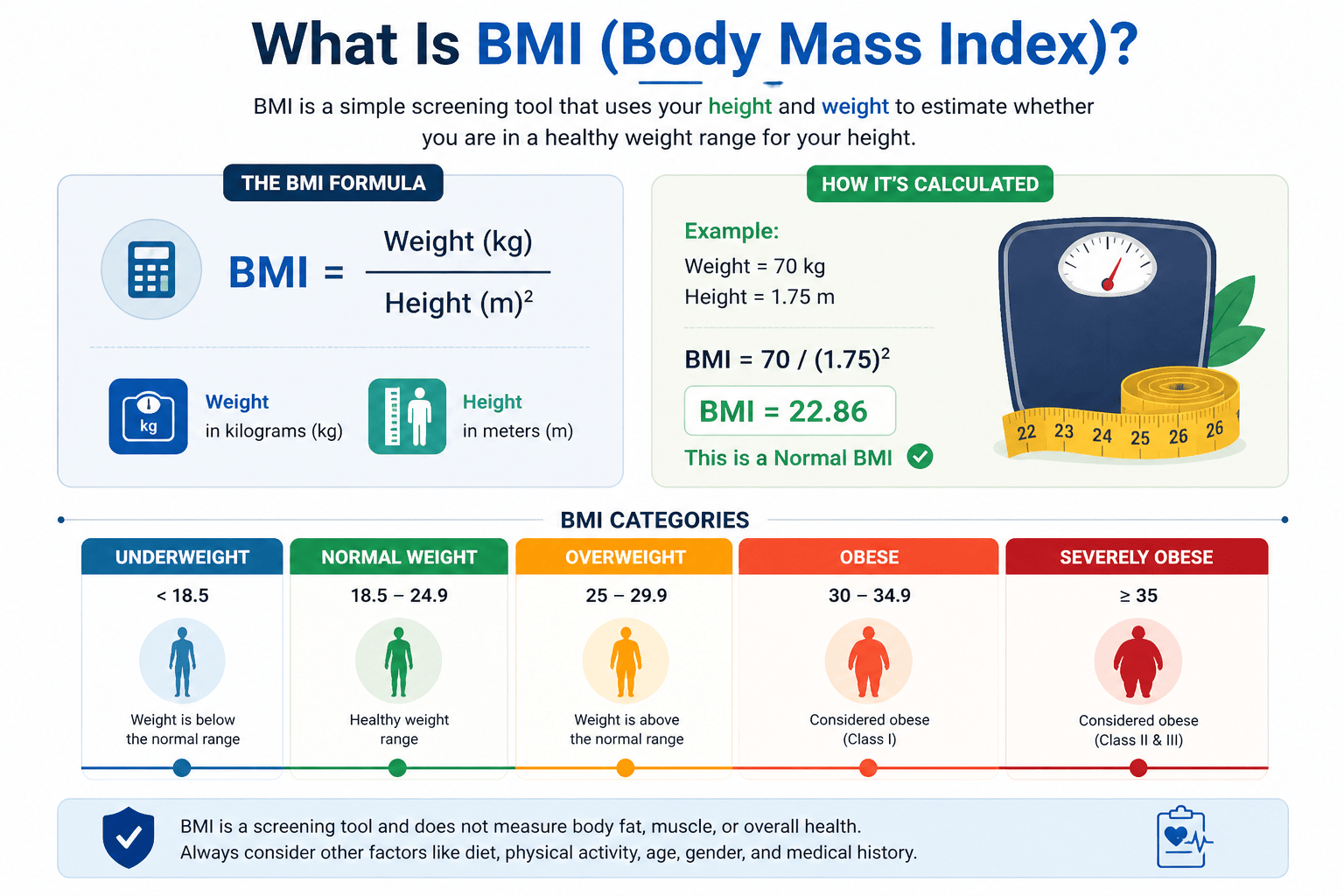
Example of how BMI is calculated and categorized. While BMI is useful for quick screening, it does not measure body fat directly.
BMI
Quick and simple, but it does not separate fat from muscle or show body composition.
Body Fat Percentage
More body-composition focused because it estimates fat mass compared with total body weight.
Best Use
Use both as general tools, then add waist size, habits, fitness, and professional guidance when needed.
To get a more complete picture, it helps to combine this with a few other simple tools. You can try a Body Fat Calculator to estimate your body composition, use a BMI Calculator for a quick weight check, and read how to understand BMI results to see how the two measurements compare.
If your goal is related to weight loss or maintenance, it also helps to understand your calorie needs. You can explore how many calories you should eat per day, learn about your metabolism in what BMR is and how it works, or see how your body burns energy at rest in calories burned at rest.
What Affects Body Fat Percentage?
Body fat percentage can change over time based on energy balance, activity level, muscle mass, and daily habits. Small, consistent changes in how you eat, move, and recover tend to matter more than short-term efforts.
If you are trying to change your body composition, it can help to understand your daily calorie needs and how your body uses energy. Guides like how many calories you need per day and BMR vs TDEE can give you a clearer starting point.
Nutrition Habits
Calorie intake, protein intake, and food quality can influence fat loss or fat gain over time.
Strength Training
Building or maintaining muscle can improve body composition even when scale weight changes slowly.
Daily Activity
Walking, exercise, and routine movement can support a healthier body composition.
Sleep and Recovery
Recovery, stress management, and consistency can all support long-term body composition goals.
How to Lower Body Fat Percentage (Realistically)
Lowering your body fat percentage usually comes from a combination of nutrition, movement, and consistency.
Simple Tool That Helps a Lot
A smart scale that tracks body fat percentage can make it easier to see trends over time instead of guessing.
Check smart body fat scales on Amazon →Create a Calorie Deficit
Eating slightly fewer calories than you burn helps reduce fat over time.
Prioritize Protein
Protein supports muscle maintenance while losing fat.
Strength Training
Resistance training helps maintain or build lean mass.
Stay Active Daily
Walking and daily movement contribute to calorie burn.
Be Consistent
Long-term habits matter more than short-term extreme efforts.
Track Progress
Monitor trends using body fat percentage, not just weight.
How to Use Your Body Fat Percentage Result
A body fat percentage result works best as a guide, not a label. It helps you understand your starting point and track trends over time, especially when combined with other measurements.
For example, pairing it with calorie awareness, activity level, and basic health habits gives a more complete picture. You might also find it helpful to look at daily calorie intake for weight loss or calories to maintain weight depending on your goal.
- Use your result as an estimate, not an exact measurement.
- Compare trends over time instead of focusing on one reading.
- Pair it with BMI, waist measurements, strength, energy, and habits.
- Focus on sustainable changes instead of extreme fat-loss goals.
- Consider professional guidance if you have medical concerns or very specific goals.
Tools That Can Help You Track Body Fat and Health
Disclosure: This section may contain affiliate links. If you buy through these links, LifeToolSuit may earn a small commission at no extra cost to you. These tools are optional and are meant to help you track your progress more clearly.
Smart Body Fat Scale
Tracks body fat percentage, weight, and other body composition metrics at home. A simple way to monitor progress over time.
View on AmazonBody Measuring Tape
Useful for tracking waist size and body measurements alongside body fat percentage.
View on AmazonFitness Tracker Watch
Tracks steps, calories, and activity levels to support fat loss and overall health goals.
View on AmazonAdjustable Dumbbells
Strength training helps improve body composition by building lean muscle mass.
View on AmazonCommon Mistakes When Using Body Fat Percentage
Understanding body fat percentage results correctly can prevent confusion and unrealistic expectations.
Focusing on One Measurement
Body fat percentage changes over time, so trends matter more than a single result.
Comparing Different Methods
Different tools use different formulas, which can lead to inconsistent readings.
Ignoring Muscle Mass
Muscle gain can change your body composition without big changes in weight.
Expecting Perfect Accuracy
All body fat measurements are estimates, not exact values.
Simple Takeaway
- Body fat percentage estimates how much of your body weight comes from fat.
- It gives more body-composition context than scale weight alone.
- It can be more specific than BMI, but it is still an estimate.
- Healthy ranges vary by sex, age, fitness level, and individual context.
- The best use is tracking realistic trends over time.
Frequently Asked Questions
What is body fat percentage?
Body fat percentage is the percentage of your total body weight that comes from fat. The rest of your weight comes from lean mass such as muscle, bones, organs, water, and other tissues.
What is a good body fat percentage?
A good body fat percentage depends on sex, age, fitness level, and individual context. General ranges can help, but they should not be treated as a complete health diagnosis.
Is body fat percentage better than BMI?
Body fat percentage gives more detail about body composition because it estimates fat mass. BMI is faster and simpler, but it cannot separate fat from muscle. Both can be useful when interpreted carefully.
How accurate are body fat percentage calculators?
Body fat percentage calculators provide estimates. Accuracy depends on the formula, measurement quality, hydration, and individual differences. They are best used for general awareness and trend tracking.
Can body fat percentage change without weight changing?
Yes. If you gain muscle while losing fat, your scale weight may change very little while your body fat percentage improves.
How often should I check body fat percentage?
Checking every few weeks or monthly is usually more useful than checking daily. Body fat estimates can fluctuate, so trends are more helpful than single readings.
Does body fat percentage help with weight loss planning?
Yes, it can help you focus on fat loss and muscle maintenance instead of only scale weight. For weight goals, it may also help to use a Calorie Needs Calculator and read How Many Calories Should You Eat Per Day?.
Related Tools and Guides
Body Metrics & Calculators
Health Guides & Learning Resources
Important Note
This guide is for educational purposes only and is not medical advice. Body fat percentage estimates can vary by method and do not diagnose health status on their own. For individual health concerns, a qualified professional can provide more personalized guidance.