There isn’t a single number that works for everyone when it comes to how much water you should drink per day. Your needs can change based on your routine, activity level, and even how your day looks.
A simple water goal can be useful, but your real needs can shift from day to day. If you want a more personalized estimate, you can try using a water intake calculator to adjust based on your body and routine.
Quick Answer: How Much Water Should You Drink Per Day?
Most people need around 2 to 3 liters of water per day, but your exact needs depend on body size, activity level, climate, and sweating.
- ~2 liters: low activity, cooler climate
- ~2.5–3 liters: average daily activity
- 3+ liters: exercise, heat, or heavy sweating
The best approach is to use this as a starting point and adjust based on thirst, urine color, and daily routine.
Quick Navigation
- What daily water intake means
- Why hydration matters
- What affects how much water you need
- How to estimate daily water intake
- Water intake based on body weight
- Is 2 liters of water per day enough?
- Best time to drink water
- Signs you may need more water
- Signs of dehydration
- Water intake and weight loss
- Common water intake mistakes
- How to build a hydration habit
- FAQ
What Does Daily Water Intake Mean?
Daily water intake refers to the amount of fluid your body gets throughout the day. It can include plain water, other drinks, and water-rich foods like fruits, vegetables, soups, and meals that contain fluid.
Plain Water
The simplest source of hydration and the easiest to track during the day.
Other Beverages
Some fluids from milk, tea, coffee, and other drinks may contribute to daily fluid intake.
Food Moisture
Water-rich foods can add meaningful hydration, especially fruits, vegetables, and soups.
Daily Losses
Your body loses water through urine, sweat, breathing, and normal body functions.
That is why daily water intake is better understood as a flexible range rather than a fixed rule. What works for one person may not feel right for someone else.
Why Hydration Matters
Water supports many everyday body functions. Staying hydrated can help your body regulate temperature, move nutrients, support digestion, and maintain normal energy and focus.
Temperature Regulation
Your body uses fluid and sweating to help manage heat and maintain a stable internal temperature.
Exercise and Movement
Hydration supports performance, comfort, and recovery during daily movement and workouts.
Digestion and Routine Wellness
Water helps support normal digestion, nutrient movement, and everyday body processes.
How Much Water You Need Per Day?
Your water needs are not fixed. They can change depending on your body, your environment, and how much fluid you lose throughout the day.
Body Size
Larger bodies may need more total fluid than smaller bodies.
Activity Level
Exercise, walking, and physical work can increase sweating and fluid needs.
Climate and Heat
Hot, humid, or dry weather can increase fluid loss and make hydration more important.
Diet and Salt Intake
Salty foods, higher protein intake, and low-water foods may affect thirst and hydration needs.
Estimate How Much Water You Should Drink Per Day
A practical way to estimate how much water you should drink per day is to start with a general target, then adjust based on thirst, activity, climate, and signs of hydration.
Start With a Baseline
Use a daily water intake estimate based on your body size, activity level, and routine.
Adjust for Sweat and Heat
Drink more when you exercise, sweat heavily, spend time in heat, or have a physically demanding day.
Watch Hydration Cues
Use thirst, urine color, energy, and comfort as practical feedback, not just a rigid number.
To make this more practical, you can use a Water Intake Calculator as a starting point, then adjust based on how your body feels.
Hydration also works closely with your overall energy needs. It can help to understand how many calories you should eat per day, how your metabolism works in what BMR is and how it works, and how your body uses energy in calories burned at rest.
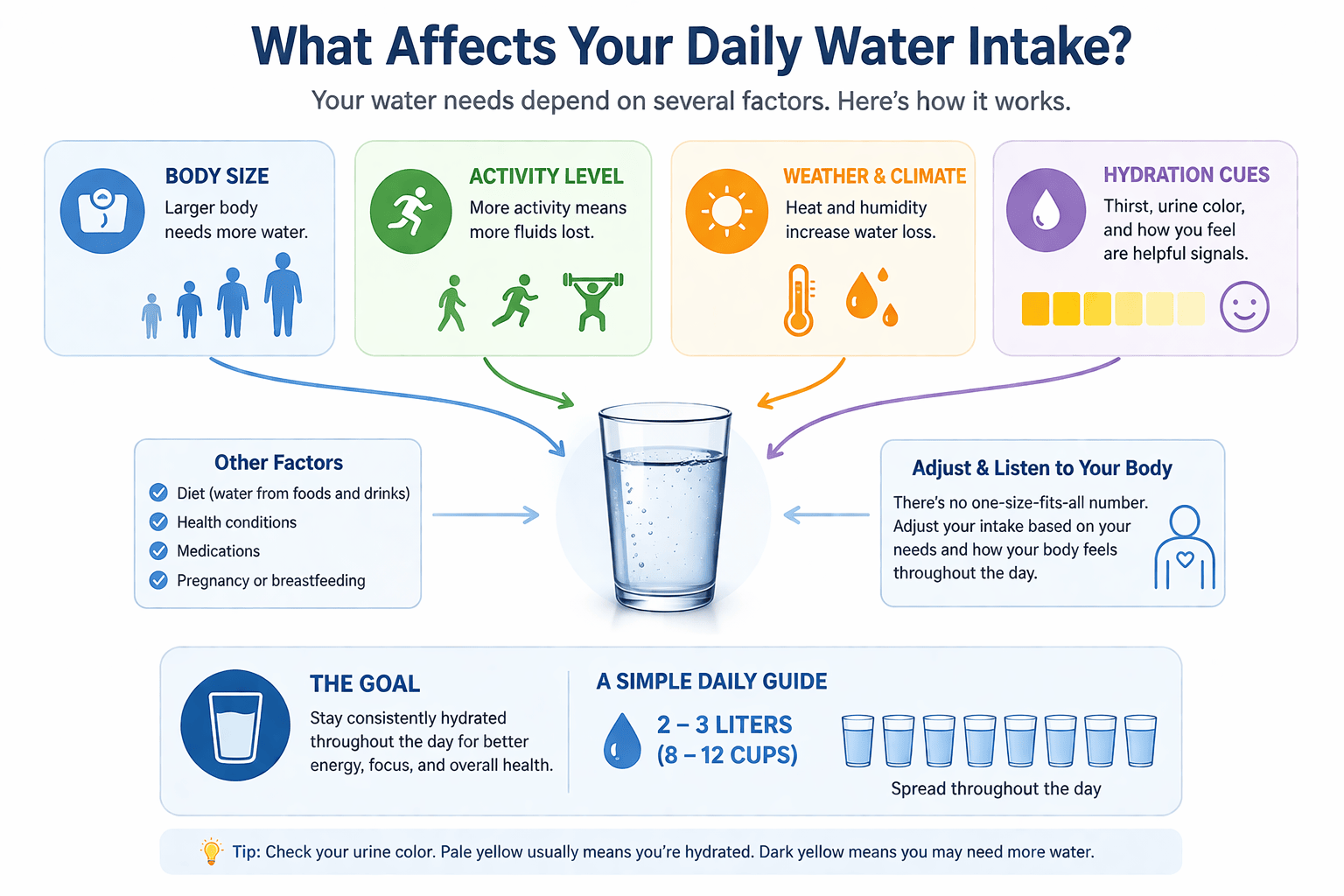
Your daily water intake depends on multiple factors like body size, activity, weather, and hydration signals.
Water Intake Based on Body Weight
A common way to estimate daily water intake is based on body weight. This gives a more personalized starting point compared to fixed numbers like “8 glasses per day.”
| Body Weight | Estimated Daily Water Intake |
|---|---|
| 50 kg (110 lbs) | 1.7 – 2.2 liters |
| 60 kg (132 lbs) | 2.0 – 2.5 liters |
| 70 kg (154 lbs) | 2.3 – 2.8 liters |
| 80 kg (176 lbs) | 2.6 – 3.2 liters |
| 90 kg (198 lbs) | 2.9 – 3.6 liters |
This is just an estimate. Your actual needs may be higher if you exercise, sweat a lot, or live in a hot environment.
Is 2 Liters of Water Per Day Enough?
Drinking 2 liters of water per day is a common guideline, but it may not be enough for everyone.
Your actual needs depend on body size, activity level, weather, and how much you sweat. Some people may need more, especially in hot climates or during exercise.
May Be Enough
For smaller individuals or those with low activity levels in cooler environments.
May Not Be Enough
For active people, hot climates, or those who sweat heavily.
Better Approach
Use 2 liters as a starting point, then adjust based on your body and routine.
What Is the Best Time to Drink Water?
There isn’t a single perfect schedule, but spreading your water intake throughout the day can help you stay consistently hydrated.
After Waking Up
Drinking water in the morning can help you rehydrate after sleep.
Before and After Meals
Water around meals may support digestion and help regulate intake.
During Exercise
Hydration during physical activity helps replace fluid lost through sweat.
Instead of focusing on one “best” time, aim to drink water consistently across your day.
Signs You May Need More Water
You do not need to obsess over every sip, but it helps to notice common hydration signals. Your body often gives clues when fluid intake may be too low.
Thirst
Thirst is a simple signal that your body may need more fluid.
Darker Urine
Very dark urine can be a sign that you may need more water, though foods and supplements can also affect color.
Heavy Sweating
Exercise, heat, and physical work can increase fluid loss and raise water needs.
Important Reminder
Hydration cues are helpful, but symptoms like severe dizziness, confusion, ongoing vomiting, or unusual weakness should be taken seriously and may need medical attention.
What Are the Signs of Dehydration?
Dehydration happens when your body loses more fluid than it takes in. Mild dehydration is common and can often be corrected by increasing fluid intake.
- Dry mouth or lips
- Dark yellow urine
- Fatigue or low energy
- Headaches
- Dizziness or lightheadedness
- Reduced sweating during exercise
If symptoms become severe or persistent, it’s important to seek medical attention.
Water Intake and Weight Loss
Water can support healthy habits, but it does not directly burn body fat on its own. Its biggest value is helping you stay hydrated and, in many cases, replacing higher-calorie drinks.
If your goal is weight loss or maintenance, hydration is just one part of the bigger picture. It also helps to look at daily calorie intake for weight loss, calories to maintain weight, and how many calories you need per day.
Helpful Habit
Drinking enough water can support routines around meals, workouts, and daily energy.
Calorie Replacement
Choosing water instead of sugary drinks may reduce calorie intake for some people.
Not a Magic Fix
Fat loss still depends on overall calorie balance, nutrition habits, activity, and consistency.
How to Build a Practical Hydration Habit
A daily water goal works best when it feels realistic. Instead of forcing a random number, build a rhythm that fits your schedule and adjust when your day changes.
- Start your day with a glass of water if that habit feels natural.
- Keep water nearby during work, errands, or study sessions.
- Drink more around workouts, hot weather, or heavy sweating.
- Use thirst and urine color as simple feedback tools.
- Adjust gradually instead of suddenly forcing very high water intake.
Common Water Intake Mistakes
Forcing Too Much Water
Drinking excessive amounts in a short time is unnecessary and can be uncomfortable.
Ignoring Thirst
Thirst is a natural signal. Ignoring it regularly can lead to mild dehydration.
Only Drinking When Thirsty
Waiting too long may cause you to fall behind your hydration needs.
Not Adjusting for Weather or Activity
Your water needs increase in heat, exercise, and sweating.
Simple Takeaway
- Daily water needs vary from person to person.
- Body size, activity, sweating, climate, and diet all affect hydration needs.
- Plain water is helpful, but foods and other fluids can also contribute.
- Drink more when you exercise, sweat, or spend time in heat.
- Use a flexible hydration routine instead of chasing one perfect number.
Helpful Hydration Tools
This section may contain affiliate links. If you buy through these links, LifeToolSuit may earn a small commission at no extra cost to you.
Reusable Water Bottle
A simple reusable bottle makes it easier to keep water nearby and track how much you drink throughout the day.
View Water BottlesWater Filter Pitcher
A filter pitcher can make plain water taste better, which may help you drink more consistently.
View Filter PitchersElectrolyte Powder
Electrolytes may be useful during workouts, hot weather, or heavy sweating when plain water alone may not feel enough.
View ElectrolytesInsulated Tumbler
An insulated tumbler keeps water cold longer, which can make hydration easier during work, errands, or travel.
View TumblersPeople Also Ask
Can drinking water lower cortisol levels?
Staying hydrated may support overall stress balance, but water alone does not directly control cortisol levels.
What happens if I drink water on an empty stomach?
Drinking water in the morning is generally safe and can help rehydrate your body after sleep.
Which time is not good for drinking water?
There is no strictly “bad” time, but drinking excessive amounts right before sleep may disrupt rest for some people.
Frequently Asked Questions
How much water should I drink per day?
There is no single water intake number that fits everyone. Your daily water needs depend on body size, activity level, sweating, weather, diet, and overall health. A water intake calculator can help estimate a starting point.
How many glasses of water should I drink per day?
The number of glasses depends on glass size and your personal needs. Some people use glasses as a simple tracking habit, but total fluid intake can also include food and other beverages.
How many liters of water per day is healthy?
A healthy number of liters varies by body size, activity, climate, and routine. People who sweat more, exercise frequently, or live in hot weather may need more fluid than someone sedentary in a cooler environment.
Can I drink too much water?
Yes. Drinking extreme amounts of water in a short period can be unsafe. For most people, steady hydration throughout the day is better than forcing excessive intake.
Does coffee or tea count toward water intake?
Coffee and tea can contribute fluid, though plain water is still a simple and reliable hydration choice. Individual tolerance, caffeine intake, and overall diet can affect what feels best.
Do I need more water when I exercise?
Usually, yes. Exercise and sweating increase fluid loss, so many people need additional water before, during, or after workouts depending on intensity, heat, and sweat level.
Does water intake help with weight loss?
Water can support weight management habits, especially when it replaces sugary drinks or helps you stay consistent with meals and workouts. For calorie planning, it may also help to use a Calorie Needs Calculator and read How Many Calories Should You Eat Per Day?.
What is the healthiest water to drink?
For most people, clean and safe drinking water is the healthiest option. This can include filtered tap water, bottled water, or mineral water depending on availability.
Is it better to drink hot or cold water?
Both hot and cold water can hydrate you effectively. The best choice usually comes down to personal preference and comfort.
Why drink water right after waking up?
Drinking water after waking up helps replace fluids lost overnight and can be an easy way to build a consistent hydration habit.
How do you know if you're drinking too much water?
Drinking excessive amounts of water in a short time can lead to discomfort or imbalance. It’s generally better to spread intake throughout the day.
Related Tools
Related Guides
Important Note
This guide is for educational purposes only and is not medical advice. Hydration needs can vary based on health conditions, medications, pregnancy, breastfeeding, heat exposure, and exercise demands. For personal medical concerns, a qualified professional can provide more specific guidance.