Most people just want a clear number to follow, but weight loss calories are not one-size-fits-all. Your intake depends on your maintenance level, activity, and how your body responds over time.
Weight loss is not about guessing the lowest calorie number you can tolerate. It is about creating a steady energy gap that your body can respond to while you can still eat enough protein, move well, sleep well, and stay consistent. That balance matters more than a random number from the internet.
Why Many People Struggle With Calorie Targets
One of the biggest reasons people give up on weight loss is because the calorie target they picked was never realistic in the first place.
A lot of online advice pushes aggressive numbers that technically create fast weight loss, but are extremely difficult to maintain in real life. On paper, eating far less may seem effective. In practice, it often turns into constant hunger, low energy, late-night cravings, inconsistent weekends, and eventually burnout.
Most sustainable weight loss does not come from perfection. It usually comes from finding a calorie intake that still allows you to enjoy meals, maintain your routine, socialize occasionally, and continue long enough for progress to compound over time.
A Common Pattern
Many people start with motivation high, slash calories too aggressively, lose weight quickly for a short period, then struggle to maintain the routine. A more moderate approach often feels slower at first, but it is usually easier to repeat consistently for months instead of days.
This is also why calorie calculators should be treated as starting points rather than perfect answers. Your actual results, hunger levels, energy, sleep, recovery, and consistency matter more than blindly following one exact number forever.
Quick Navigation
- What a calorie deficit actually means
- Why many people struggle with calorie targets
- Start with maintenance calories
- A realistic calorie deficit example
- How much should you reduce calories?
- Warning signs your calories may be too low
- What affects your calorie needs?
- Calories matter, but food quality still helps
- Common mistakes people make
- What to do when weight loss stalls
- How to adjust calories over time
- What sustainable weight loss actually looks like
- References and sources
- FAQ
What Is a Calorie Deficit?
A calorie deficit means your body uses more calories than you eat over time. When that happens consistently, your body has to use stored energy to make up the difference.
This is the basic principle behind weight loss and fat loss. You can create a deficit by eating slightly less, moving more, or using a combination of both. Most people do best when the deficit is not extreme.
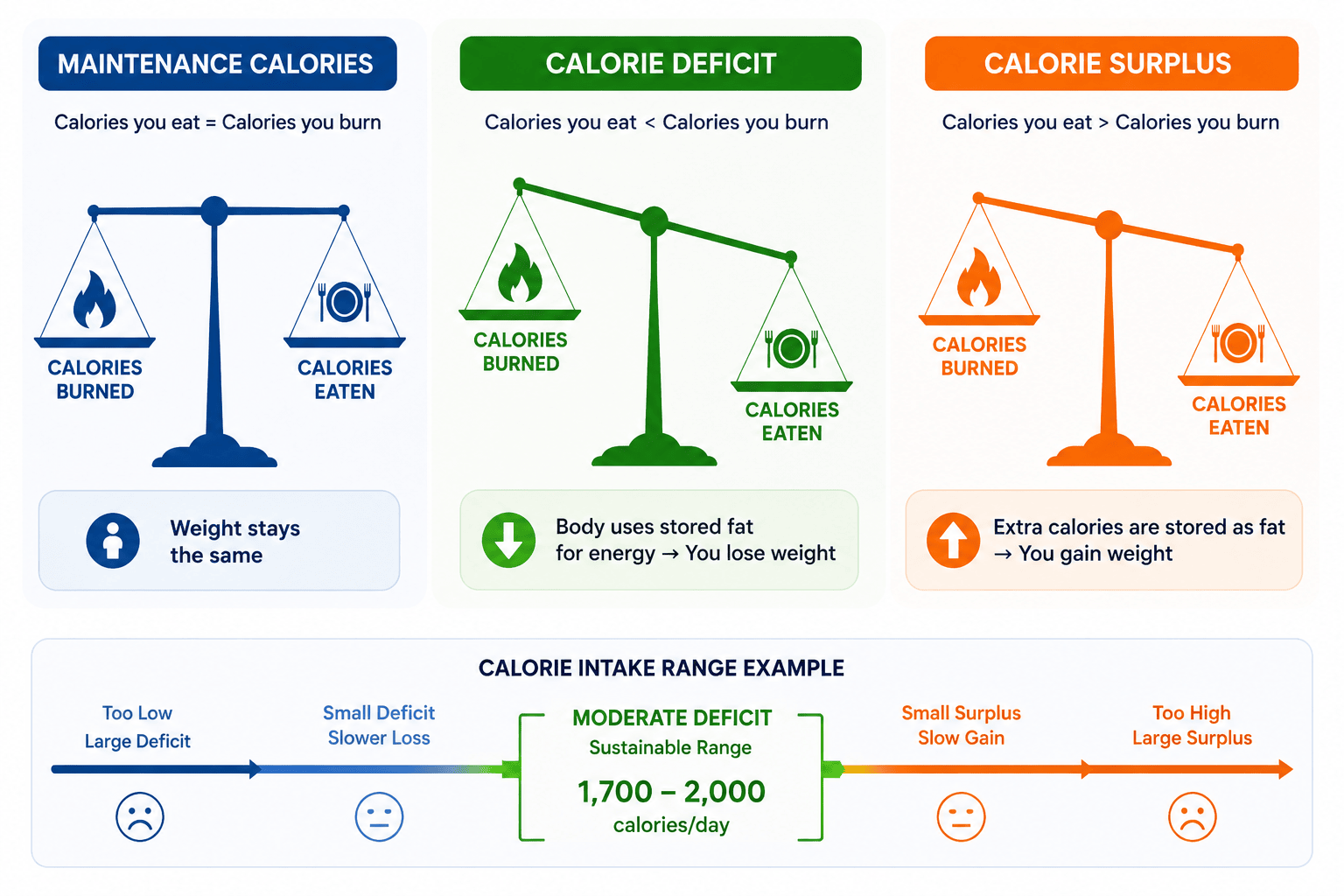
Example of how a calorie deficit works for weight loss by reducing intake below maintenance calories.
Quick Reality Check
If a calorie target feels impossible to follow for more than a few days, it is probably too aggressive. The best weight loss plan is usually the one you can realistically maintain during normal life, not just during highly motivated weeks.
Calories In
The calories you get from meals, snacks, drinks, cooking oils, sauces, and extras.
Calories Out
The calories your body uses through BMR, movement, exercise, digestion, and daily activity.
The Deficit
The gap between what you eat and what your body uses over time.
The Trend
The long-term pattern matters more than one perfect day or one scale reading.
That’s why it helps to focus on a deficit you can sustain, not the lowest number you can push yourself to follow.
Start With Maintenance Calories
Before setting a daily calorie intake for weight loss, it helps to estimate your maintenance calories. Maintenance calories are the calories you can eat while your weight stays fairly stable.
Once you know your maintenance estimate, you can reduce from there. This gives you a more personal starting point than choosing a random calorie target.
Estimate BMR
BMR is the energy your body uses at rest for basic functions like breathing and circulation.
Add Activity
Daily steps, workouts, chores, job activity, and exercise raise your total calorie needs.
Create a Deficit
For weight loss, you reduce slightly below maintenance and track the trend over time.
You can estimate this using a Calorie Needs Calculator. You can also learn the basics with How Many Calories Do I Need Per Day?.
A Realistic Example of a Weight Loss Calorie Deficit
Calorie deficits make more sense when you see them in a practical situation instead of just reading definitions.
| Scenario | Example Intake | What Usually Happens |
|---|---|---|
| Very aggressive deficit | 1,200 calories | Fast initial scale changes, but often harder to sustain due to hunger and fatigue. |
| Moderate deficit | 1,700–2,000 calories | Steadier progress with better energy and better long-term consistency. |
| Maintenance calories | 2,300–2,500 calories | Weight tends to stay relatively stable over time. |
The exact numbers will vary from person to person, but this example shows why sustainability matters. The goal is not simply eating the smallest amount possible. The goal is maintaining a calorie deficit long enough for it to actually work.
This is also where tools like a Calorie Needs Calculator become useful because they help create a more personalized starting point instead of relying on random numbers from social media.
How Much Should You Reduce Calories?
Most people do better with a moderate reduction rather than an extreme cut. A small deficit may feel easier but progress is slower. A large deficit may move faster at first but can be harder to maintain.
Small Deficit
Usually easier to maintain. Progress may be slower, but energy and hunger may feel more manageable.
Moderate Deficit
A balanced approach for many people. It can support steady progress without feeling too aggressive.
Large Deficit
May create faster scale changes, but it can also increase hunger, fatigue, and the chance of quitting.
Simple Rule
The best calorie deficit is not always the biggest one. It is the one you can repeat while still eating enough to function well.
A good calorie target should help you lose weight while keeping your meals realistic. If your target makes you feel constantly drained, it may be too low for your routine.
Warning Signs Your Calories May Be Too Low
Many people assume faster weight loss automatically means better progress, but extremely low calorie intake can create problems that make consistency much harder over time.
Constant Hunger
Feeling hungry occasionally is normal during weight loss. Feeling obsessed with food all day is usually not a great sign.
Low Workout Performance
If strength, endurance, or recovery drop dramatically, your intake may be too aggressive for your activity level.
Poor Sleep
Some people notice worse sleep quality or increased nighttime cravings when calories are extremely low.
Burnout and Binge Cycles
Overly restrictive dieting often leads to “starting over” repeatedly instead of building stable habits.
Weight Loss Should Still Feel Livable
A calorie deficit should challenge you slightly, but it should not make everyday life feel miserable. If your plan constantly feels impossible to maintain, the deficit may simply be too aggressive.
What Affects Your Weight Loss Calories?
The number of calories you need for weight loss depends on more than your current weight. Your activity level, body size, age, muscle mass, and routine all matter.
Body Size
Taller or heavier bodies usually burn more calories, so they may have higher maintenance calories.
Daily Movement
Steps, chores, workouts, and physical work can raise your daily calorie burn.
Muscle Mass
More lean mass can increase calorie needs and help support better body composition.
BMR and Metabolism
Your resting energy use affects how many calories you burn before activity is included.
Tracking Accuracy
Portions, oils, drinks, snacks, and weekends can quietly affect your true calorie intake.
Sleep and Stress
Poor sleep and high stress can affect hunger, cravings, consistency, and workout recovery.
Calories Matter, But Food Quality Still Helps
Weight loss depends on a calorie deficit, but the foods you choose can make that deficit easier or harder to follow. Protein, fiber, hydration, and meal satisfaction can all help with consistency.
Protein
Helps with fullness and supports muscle maintenance during weight loss.
Fiber
Fruits, vegetables, beans, and whole grains can make meals more filling.
Hydration
Drinking enough water can support energy and make routines feel easier.
Meal Satisfaction
A plan that includes foods you enjoy is easier to repeat long term.
You can pair calorie planning with a Macro Calculator to estimate protein, carbs, and fat targets.
What to Do When Weight Loss Stalls
Almost everyone experiences periods where progress slows down temporarily. This does not always mean your calorie deficit stopped working.
Weight can fluctuate because of sodium, stress, sleep, digestion, hormones, hydration, and even harder workouts. This is why looking only at one scale reading can become frustrating very quickly.
- Look at trends across several weeks instead of single days.
- Check consistency before lowering calories further.
- Review portion sizes, snacks, oils, and drinks honestly.
- Consider daily movement and step count, not only workouts.
- Make small adjustments instead of extreme cuts.
Many plateaus are actually consistency problems rather than metabolism problems. Small habits repeated daily usually matter more than dramatic short-term changes.
How to Adjust Your Calories Over Time
Your first calorie target is only a starting point. After a few weeks, your results can tell you whether the target is working.
- Follow your calorie target as consistently as possible for at least a few weeks.
- Track average weight instead of reacting to one daily weigh-in.
- Notice energy, hunger, sleep, workouts, and recovery.
- If progress is too fast and you feel awful, calories may be too low.
- If progress is not moving after several weeks, review tracking and activity first.
- Make small adjustments instead of cutting calories aggressively.
Weight loss is not perfectly linear. Some weeks will look better than others. The overall trend matters more than one day or one meal.
Common Mistakes With Weight Loss Calories
Calorie planning should make your goal clearer, not make your life miserable. These common mistakes can make weight loss harder than it needs to be.
Eating Too Little
Very low calories can cause fatigue, hunger, poor recovery, and burnout.
Guessing Portions
Small extras like oil, sauces, snacks, and drinks can add up quickly.
Ignoring Weekends
A strong weekday deficit can disappear if weekends are not considered.
Expecting Fast Results
Sustainable progress usually takes time and requires consistency.
Progress Is Not Just the Scale
Waist measurements, how clothes fit, strength, energy, photos, and consistency can also show progress. The scale is useful, but it is not the only signal.
Simple Takeaway
- Weight loss usually requires a calorie deficit.
- Your deficit should start from your estimated maintenance calories.
- A moderate deficit is often easier to maintain than an extreme cut.
- Protein, fiber, hydration, and meal satisfaction can make the deficit easier.
- Track trends over several weeks instead of reacting to one day.
- Adjust calories slowly based on real progress, energy, and consistency.
What Sustainable Weight Loss Actually Looks Like
Sustainable weight loss usually looks far less dramatic than social media transformations.
It often involves normal meals, occasional imperfect days, gradual adjustments, and learning how to maintain habits through stressful weeks, vacations, holidays, and changing schedules.
Many people who successfully lose weight long term eventually stop obsessing over exact calorie numbers every single day. Instead, they develop better awareness around portions, protein intake, meal structure, activity, and consistency.
The Goal Is Not Just Losing Weight
The real challenge is building a routine you can realistically maintain after the initial motivation fades. A slower approach that fits your lifestyle is often more effective than a perfect plan that only lasts two weeks.
This is why sustainable calorie intake matters more than chasing the lowest possible number.
Frequently Asked Questions
How many calories should I eat to lose weight?
It depends on your maintenance calories, body size, activity level, and goal. Most people need to eat below maintenance calories, but the deficit should be realistic enough to follow consistently.
Is a calorie deficit required for weight loss?
Yes, weight loss generally requires a calorie deficit over time. This means your body uses more calories than you eat.
How much of a calorie deficit should I use?
Many people do best with a moderate deficit. A very large deficit may create faster results at first, but it can also make hunger, fatigue, and consistency harder.
Can I lose weight without tracking calories?
Yes, some people lose weight through portion control, higher-protein meals, more whole foods, fewer sugary drinks, and more activity. Tracking calories is one tool, not the only option.
Should I eat back exercise calories?
Be careful with this because workout calorie estimates can be high or low. Some people eat back part of exercise calories, while others use activity as part of the overall deficit.
What if my weight loss stalls?
First check consistency, tracking accuracy, activity level, and how long the stall has lasted. If the trend is truly stalled for several weeks, a small calorie adjustment or activity change may help.
Are very low calorie diets safe?
Very low calorie diets may not be appropriate for many people and can affect energy, hunger, recovery, and nutrition. If you are considering a very low intake, it is best to seek qualified guidance.
Tools That Can Help Support Weight Loss Progress
Disclosure: This section may contain affiliate links. If you buy through these links, LifeToolSuit may earn a small commission at no extra cost to you. These tools are optional and are meant to help support calorie tracking, meal planning, activity tracking, and long-term consistency.
Digital Food Kitchen Scale
One of the most practical tools for calorie tracking and portion awareness. Helpful for measuring ingredients more accurately instead of guessing serving sizes.
View on AmazonMeal Prep Containers
Preparing meals ahead of time can make calorie targets easier to maintain during busy workdays and stressful weeks.
View on AmazonFitness Tracker Watch
Useful for tracking steps, activity levels, workouts, and overall daily movement while working toward a calorie deficit.
View on AmazonProtein Shaker Bottle
Protein intake can help with fullness and muscle maintenance during weight loss. A shaker bottle makes high-protein meals and shakes more convenient.
View on AmazonRelated Weight Loss Tools
Related Guides
References and Educational Sources
This guide is based on established nutrition and weight management principles related to calorie balance, energy expenditure, and sustainable weight loss habits.
- Centers for Disease Control and Prevention (CDC)
- National Institutes of Health (NIH)
- Academy of Nutrition and Dietetics
- Harvard T.H. Chan School of Public Health
- Research related to calorie balance, energy expenditure, and behavior-based weight management
Editorial Note
LifeToolSuit guides are written to simplify complex health topics into practical, beginner-friendly explanations. These guides are educational resources and should not replace personalized medical or nutrition advice.
Important Note
This guide is for educational purposes only and is not medical advice. Calorie needs can vary widely, especially during pregnancy, breastfeeding, medical conditions, eating disorder recovery, intense training, or major lifestyle changes. If you have personal medical or nutrition concerns, a qualified professional can provide guidance that fits your situation.