A lot of people start cardio for weight loss with the same idea: “I just need to burn more calories.” That is partly true, but it is not the whole story.
Cardio can be one of the most useful tools for losing weight because it helps increase your total daily calorie burn. But the best cardio plan is not always the most intense one. It is the one you can repeat, recover from, and fit into your real life without feeling like exercise has taken over your schedule.
This is where many people get stuck. They begin with long workouts, daily sweat sessions, or intense HIIT routines because they want quick results. For a week or two, motivation carries them. Then hunger increases, legs feel heavy, sleep gets worse, and the plan becomes hard to maintain. A smarter cardio plan works differently. It helps you burn calories, build endurance, and stay consistent without relying on punishment or extreme effort.
Quick Navigation
- How cardio helps with weight loss
- Why cardio still needs a calorie deficit
- Best cardio workouts for weight loss
- Steady cardio vs HIIT
- Best beginner cardio options
- Weekly cardio plan for weight loss
- How much cardio should you do?
- Should you combine cardio with strength training?
- Common cardio mistakes
- Realistic weight loss expectations
- Helpful tools for cardio and weight loss
- Practical takeaways
- Editorial and research policy
- References and sources
- FAQ
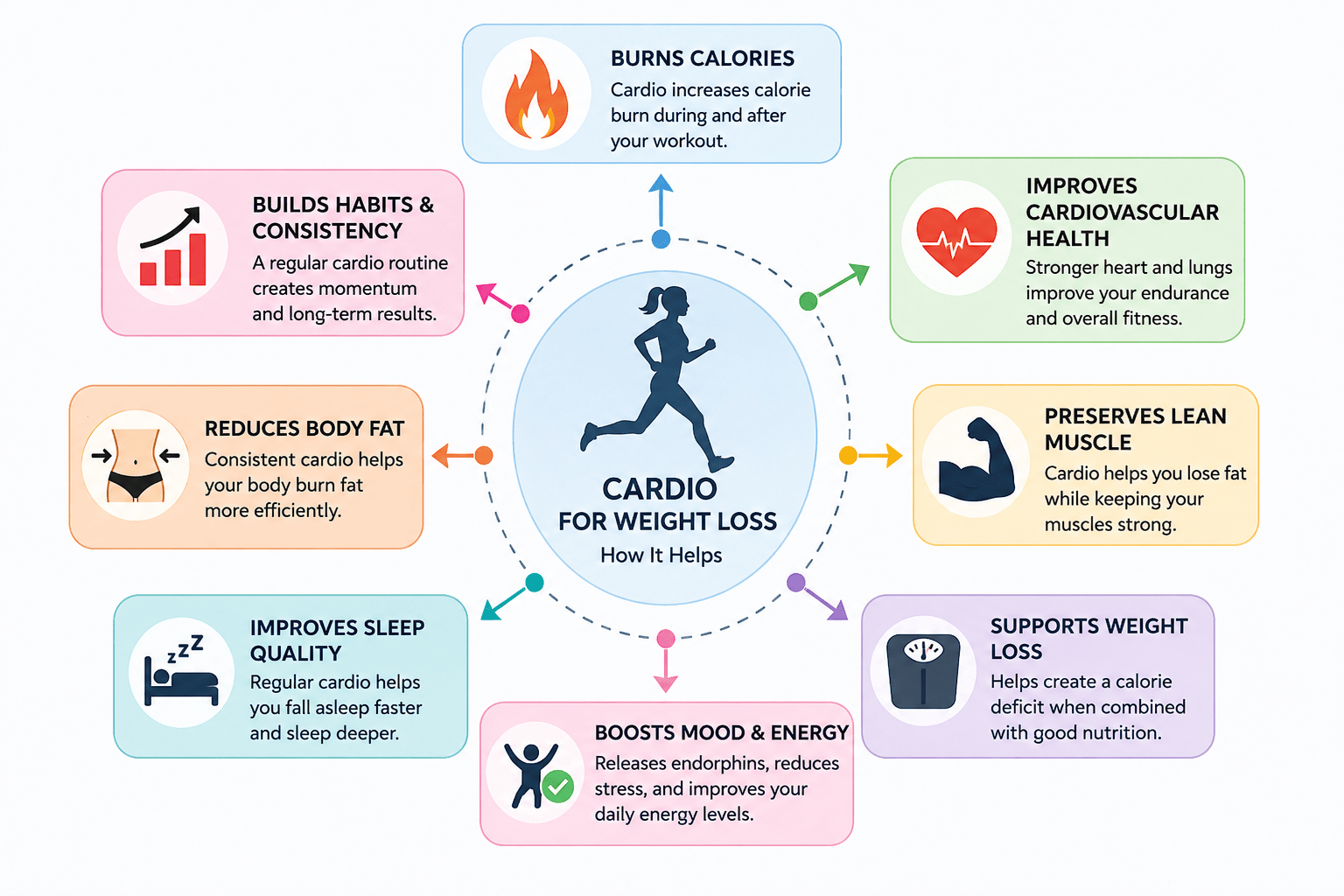
Cardio supports weight loss by helping you burn more calories, improve endurance, move more consistently, and build a routine you can repeat over time.
How Cardio Helps With Weight Loss
Cardio helps with weight loss mainly by increasing energy expenditure. In simple terms, it gives your body another way to use calories. When you walk, cycle, swim, jog, dance, row, or use an elliptical machine, your muscles need energy to keep moving.
But cardio is not only about the calories burned during the workout. A good cardio routine can also make daily movement feel easier. Someone who walks regularly may eventually find it easier to take the stairs, run errands, stand more, or be more active without thinking about it. That matters because weight loss is usually influenced by your whole day, not just the 30 minutes you spend exercising.
Burns Calories
Cardio increases calorie burn during the workout and can help support a calorie deficit when combined with appropriate food intake.
Improves Endurance
Better endurance makes movement feel less exhausting, which can help you stay active more consistently.
Supports Heart Health
Aerobic exercise challenges the heart and lungs, helping improve cardiovascular fitness over time.
Builds Momentum
A manageable cardio routine can make weight loss feel more structured and less dependent on motivation.
The most important thing to understand is that cardio is a tool. It is not magic, and it does not cancel out every food choice. But when used well, it can make weight loss more realistic because it adds movement to your routine in a measurable way.
Why Cardio Still Needs a Calorie Deficit
Weight loss happens when your body uses more energy than you consume over time. Cardio can help you create that gap, but it does not guarantee it. This is why some people do cardio regularly and still feel stuck.
For example, a person might burn calories during a workout but then feel hungrier later and eat more than usual. That does not mean cardio failed. It means the full weight loss picture includes both movement and intake. This is also why very intense cardio can backfire for some beginners. It may increase fatigue and hunger so much that staying consistent becomes harder.
Simple Way to Think About It
Cardio can help create the calorie deficit, but your overall eating pattern determines whether that deficit actually remains by the end of the day.
If you are unsure where to start with calories, use the Calorie Needs Calculator to estimate your daily target. You can also use the BMR Calculator to understand your baseline calorie burn before activity.
Best Cardio Workouts for Weight Loss
The best cardio for weight loss is not automatically the workout that burns the most calories per minute. The better question is: which workout can you do consistently without getting injured, bored, or exhausted?
A workout that burns a lot of calories but leaves you sore for three days may not be the best choice. A simple walk that you can do five times a week may create more progress over a month than a brutal workout you only repeat twice.
| Cardio Type | Best For | Weight Loss Notes |
|---|---|---|
| Walking | Beginners, low-impact fat loss, daily movement | Easy to recover from and realistic for most people. |
| Incline Walking | Higher calorie burn without running | Great for people who want intensity with lower joint impact. |
| Cycling | Low-impact cardio, longer sessions | Good option if running bothers your knees or ankles. |
| Jogging | Cardio fitness and calorie burn | Effective, but beginners should increase slowly. |
| Swimming | Full-body, joint-friendly cardio | Helpful for people who want low-impact movement. |
| Rowing | Full-body conditioning | Can be very effective but form matters. |
| HIIT | Short, intense workouts | Useful in moderation, but harder to recover from. |
For most people, a mix works best. You might use walking as your base, add one or two moderate sessions, and include occasional higher-intensity work only if your body handles it well.
Steady Cardio vs HIIT for Weight Loss
Steady cardio and HIIT can both support weight loss, but they feel very different in real life. Steady cardio usually means you move at a pace you can maintain for a longer time. HIIT means short bursts of hard effort followed by easier recovery periods.
Steady Cardio
Walking, cycling, jogging, swimming, and elliptical workouts at a manageable pace. Easier to recover from and often better for building consistency.
HIIT
Short intervals of intense effort. Efficient, but demanding. Best used carefully, especially if you are new to exercise.
Best Choice
Most people do well with mostly steady cardio and a small amount of higher-intensity work if recovery is good.
HIIT gets a lot of attention because it sounds efficient. But efficient does not always mean sustainable. If HIIT makes you dread exercise, feel drained, or overeat afterward, it may not be the best main strategy. Steady cardio may feel less exciting, but it is often easier to repeat week after week.
Best Beginner Cardio Options
If you are starting from a low fitness level, the goal is not to prove how hard you can push. The goal is to build the habit and let your body adapt. Beginner cardio should feel challenging enough to matter, but not so difficult that you need several days to recover.
Walking
Walking is one of the most underrated forms of cardio for weight loss. It is simple, low impact, and easy to add before work, after dinner, or during breaks.
Incline Walking
Incline walking can raise intensity without requiring running. It works well on a treadmill or outdoor hills.
Stationary Bike
Cycling is joint-friendly and easy to control. It is a good option if you want cardio while watching a show or listening to a podcast.
Swimming or Water Exercise
Water-based cardio is helpful for people who need a lower-impact option that still challenges the body.
Beginners usually make better progress when they start with workouts they can finish comfortably. You can always increase time, pace, or difficulty later.
Simple Weekly Cardio Plan for Weight Loss
A realistic weekly plan should have enough movement to help with weight loss, but not so much that your body constantly feels behind on recovery. The plan below is a simple starting point. You can adjust the days based on your schedule.
| Day | Workout | Intensity |
|---|---|---|
| Monday | 30-minute brisk walk or incline walk | Easy to moderate |
| Tuesday | Strength training or light movement | Moderate |
| Wednesday | 25 to 35 minutes cycling, elliptical, or jogging | Moderate |
| Thursday | Rest day or 20-minute easy walk | Easy |
| Friday | 30-minute walk plus short intervals if appropriate | Moderate |
| Saturday | Long walk, hike, bike ride, or swimming | Easy to moderate |
| Sunday | Rest, stretching, or casual movement | Recovery |
Beginner Tip
If this feels like too much, start with three cardio sessions per week and one or two short walks. It is better to finish the week feeling capable than to start too hard and quit.
How Much Cardio Should You Do to Lose Weight?
There is no single perfect amount of cardio for everyone. A person who is already active may need a different plan than someone who currently sits most of the day. Your schedule, recovery, stress level, sleep, and food intake all matter.
Start Small
Begin with 20 to 30 minutes, three days per week, especially if you are new to exercise.
Add Gradually
Increase time or frequency slowly. Avoid jumping from zero workouts to daily hard cardio.
Watch Recovery
If energy, sleep, mood, or joints suffer, you may need less intensity or more rest.
A practical range for many people is three to five cardio sessions per week, with a mix of easy and moderate effort. Some people also benefit from daily walking because it is easier to recover from than hard workouts.
To estimate how your movement affects your overall calorie needs, try the Calorie Needs Calculator or the Calorie Burn and Steps Calculator.
Should You Combine Cardio With Strength Training?
Yes, most people trying to lose weight benefit from combining cardio with strength training. Cardio helps increase calorie burn and improve endurance. Strength training helps preserve or build muscle while you lose weight.
This matters because the goal is usually not just to make the scale go down. Most people want to lose fat, keep muscle, feel stronger, and look healthier. If you only do cardio and eat too little protein, you may lose weight, but the result may not feel as satisfying.
Cardio Helps With
Calorie burn, heart health, endurance, daily movement, and weight loss consistency.
Strength Training Helps With
Muscle retention, body shape, strength, metabolism support, and long-term function.
Nutrition Helps With
Calorie control, protein intake, hunger management, recovery, and sustainable fat loss.
A simple routine could include two or three strength sessions per week plus three or four cardio sessions. You do not need to train like an athlete. You need a plan that you can repeat.
Common Cardio Mistakes That Make Weight Loss Harder
Cardio is helpful, but it can become frustrating when people use it in a way that is too aggressive, random, or disconnected from the rest of their weight loss plan.
Doing Too Much Too Soon
Starting with daily long workouts may feel productive, but it often leads to soreness, fatigue, and inconsistency. Progress is easier when you build volume gradually.
Using Cardio as Punishment for Eating
Cardio should support your health, not become a way to punish yourself after meals. That mindset can make weight loss feel stressful and unsustainable.
Trusting Calorie Burn Numbers Too Much
Treadmills, watches, and apps can estimate calorie burn, but they are not perfect. Use them as rough guides, not exact permission to eat back every calorie.
Ignoring Food Intake
Cardio can help create a calorie deficit, but food intake still matters. A small amount of extra snacking can erase the calorie gap from a workout.
Only Doing Intense Workouts
Hard workouts are not automatically better. Lower-intensity cardio can be easier to recover from and more sustainable long term.
Realistic Weight Loss Expectations From Cardio
Cardio can help you lose weight, but results usually come from repeated weeks of consistent effort, not one perfect workout. A realistic pace for many people is slow and steady fat loss, especially when the plan is built around habits you can keep.
You may notice fitness improvements before major scale changes. Stairs may feel easier. Your walking pace may improve. You may recover faster after workouts. These changes matter because they show your body is adapting, even if the scale does not move every day.
What to Track Besides the Scale
Track energy, walking distance, workout consistency, waist measurements, progress photos, resting heart rate, clothing fit, and how easy daily movement feels.
If you want a more structured weight loss estimate, use the Weight Loss Calculator. For a deeper guide on calorie targets, read Daily Calorie Intake for Weight Loss.
Helpful Tools for Cardio and Weight Loss
You do not need expensive gear to lose weight, but a few simple tools can make cardio easier to track and repeat. The best tools are the ones that help you stay consistent, comfortable, and aware of your progress.
Disclosure: This section may contain affiliate links. If you buy through these links, LifeToolSuit may earn a small commission at no extra cost to you. These tools are optional and are meant to support healthier cardio, movement, and weight loss habits.
Fitness Tracker Watch
Helpful for tracking steps, workouts, heart rate, estimated calorie burn, and weekly movement trends.
View on AmazonComfortable Walking Shoes
A supportive pair of walking shoes can make daily walks more comfortable and easier to repeat.
View on AmazonLarge Water Bottle
Useful for staying hydrated during walks, gym workouts, cycling sessions, and longer cardio days.
View on AmazonExercise Mat
Helpful for warmups, cooldowns, stretching, mobility work, and low-impact home cardio sessions.
View on AmazonPractical Takeaways
- Cardio helps with weight loss by increasing calorie burn, but it still works best with a calorie deficit.
- The best cardio is the type you can repeat consistently without feeling exhausted or injured.
- Walking is a strong beginner option because it is simple, low impact, and easy to recover from.
- HIIT can be useful, but it should not be the only plan if recovery becomes a problem.
- Combining cardio with strength training usually creates better body composition results.
- Cardio machines and watches estimate calorie burn, but the numbers are not exact.
- A realistic routine beats a perfect plan that only lasts one week.
Editorial and Research Policy
This guide was written to help everyday readers understand cardio for weight loss in a realistic and practical way. The goal is not to promote extreme exercise routines or quick-fix claims, but to explain how cardio fits into a healthier fat loss plan.
LifeToolSuit health guides are created with an educational approach focused on clarity, usability, and sustainable lifestyle habits. Because calorie needs, exercise tolerance, recovery, and health status vary from person to person, this guide should be used as general information rather than personal medical advice.
References and Sources
- Centers for Disease Control and Prevention — Physical Activity Basics
- American Heart Association — Recommendations for Physical Activity in Adults
- Harvard T.H. Chan School of Public Health — Physical Activity and Weight Control
- Mayo Clinic — Exercise and Weight Loss Guidance
- National Institutes of Health — Physical Activity and Weight Management Research
Frequently Asked Questions
Is cardio good for weight loss?
Yes. Cardio can help with weight loss because it increases calorie burn and improves fitness. It works best when paired with a realistic calorie deficit, enough protein, and consistent daily habits.
What is the best cardio for weight loss?
The best cardio is the one you can do consistently. Walking, cycling, jogging, swimming, rowing, incline walking, and elliptical workouts can all support weight loss.
How much cardio should I do to lose weight?
Many beginners can start with 20 to 40 minutes of cardio, three to five days per week. The right amount depends on your current fitness level, recovery, schedule, and food intake.
Can I lose weight with cardio only?
You can lose weight with cardio if it helps you maintain a calorie deficit. However, combining cardio with nutrition habits and strength training is usually more sustainable.
Is walking enough cardio for weight loss?
Walking can be enough when done consistently and paired with a calorie deficit. It is especially useful for beginners because it is low impact and easy to recover from.
Is HIIT better than steady cardio?
HIIT is not automatically better. It can burn calories quickly, but it is harder to recover from. Steady cardio is often easier to repeat consistently.
Should I do cardio every day?
You do not need hard cardio every day to lose weight. Light walking can often be done daily, but intense sessions should be balanced with recovery.
Related Tools
Use these tools to estimate calorie needs, weight loss targets, steps, and daily energy burn.
Related Guides
Continue learning about calories, weight loss, metabolism, and realistic fitness planning.
Important Note
This guide is for educational purposes only and is not medical advice. Exercise and weight loss needs can vary based on age, health conditions, medications, pregnancy, injury history, eating disorder recovery, and fitness level. If you have medical concerns or are starting exercise after a long break, speak with a qualified healthcare professional.